On this page
USDT to ZAR is really a dollar price in rand with a South African twist. At 08:32 UTC on 17 November 2026, 1 USDT was worth R16.94 at the global average price (CoinGecko) and R17.02 on VALR and R17.03 on Luno, while the official dollar rate was about R16.96. In practice R1,000 bought roughly 58.5 USDT on a local order book after fees. The converter above refreshes every minute: type a rand amount, or swap the arrows to see what your USDT is worth in rand.
USDT, issued by Tether, is a stablecoin designed to track the US dollar, and it is by far South Africa’s busiest crypto market. On VALR, USDT/ZAR traded about R259.5 million in the 24 hours to 08:10 UTC on 17 Nov 2026, against R8.97 million for BTC/ZAR. People use it as a dollar savings pot, a way to move value between platforms and a stepping stone into other coins. This page covers why USDT sits a little above the dollar rate, what P2P sellers charge, and what it costs to sell USDT and get rand into your bank.
USDT to ZAR table
Because USDT is pegged to the dollar, the conversion is easy to sanity-check in your head: rand ≈ USDT × the USDT/ZAR price, and at around R17 a USDT, R1,000 is a little under 59 USDT before fees. The tables use the prices at 17 Nov 2026 08:32 UTC: R16.94 at CoinGecko’s global average, and the last trades on VALR (R17.024) and Luno (R17.0337).
| USDT | Global (CoinGecko) | VALR | Luno |
|---|---|---|---|
| 1 USDT | R16.94 | R17.02 | R17.03 |
| 10 USDT | R169.40 | R170.24 | R170.34 |
| 100 USDT | R1,694.00 | R1,702.40 | R1,703.37 |
| 1,000 USDT | R16,940 | R17,024 | R17,033.70 |
| 10,000 USDT | R169,400 | R170,240 | R170,337 |
USDT to rand, 17 Nov 2026 08:32 UTC, before fees. Local columns show each exchange's last traded price.
Buying USDT with rand is where fees show. The next table takes each exchange’s ask price at the same moment and deducts the fee for a market order (taker) or Luno’s one-tap instant buy.
| You spend | Global price, no fees | VALR order book | Luno order book | Luno instant buy |
|---|---|---|---|---|
| R100 | 5.90 USDT | 5.85 USDT | 5.86 USDT | 5.75 USDT |
| R500 | 29.52 USDT | 29.27 USDT | 29.29 USDT | 28.77 USDT |
| R1,000 | 59.03 USDT | 58.54 USDT | 58.59 USDT | 57.53 USDT |
| R5,000 | 295.16 USDT | 292.68 USDT | 292.95 USDT | 287.67 USDT |
| R10,000 | 590.32 USDT | 585.35 USDT | 585.90 USDT | 575.33 USDT |
Rand to USDT, 17 Nov 2026 08:32 UTC. VALR ask R17.024 with a 0.35% taker fee; Luno ask R17.0337 with a 0.20% taker fee or 2% instant buy.
Notice that Luno’s price was a hair higher, yet its order book still gave you slightly more USDT, because Luno charges takers only 0.20% on USDT/ZAR (and pays makers a 0.01% rebate), against VALR’s 0.35% taker and 0.18% maker fees on rand pairs. On a R10,000 purchase that’s about half a USDT. The one-tap screen, by contrast, cost you ten USDT.
USDT vs the official dollar rate
The “official” rate you see on Google or in a banking app is a mid-market benchmark: roughly the midpoint at which banks trade dollars with each other. On the morning of 17 Nov 2026, three free reference feeds put it between R16.943 and R16.976. USDT/ZAR was R17.024 on VALR. Three things explain the gap.
- USDT is not exactly one dollar. CoinGecko priced it at US$0.9994 at our snapshot. It usually stays within a fraction of a cent of US$1, but in stressed markets stablecoins have slipped further.
- The local premium. South African order books add a small premium, explained in the next section.
- Nobody buys dollars at mid-market. When you buy dollars from a bank or forex app, its margin and fees are added; the reference rate is a benchmark, not a quote. So USDT at 0.4% above mid-market is not necessarily dearer than the dollars your bank would actually sell you.
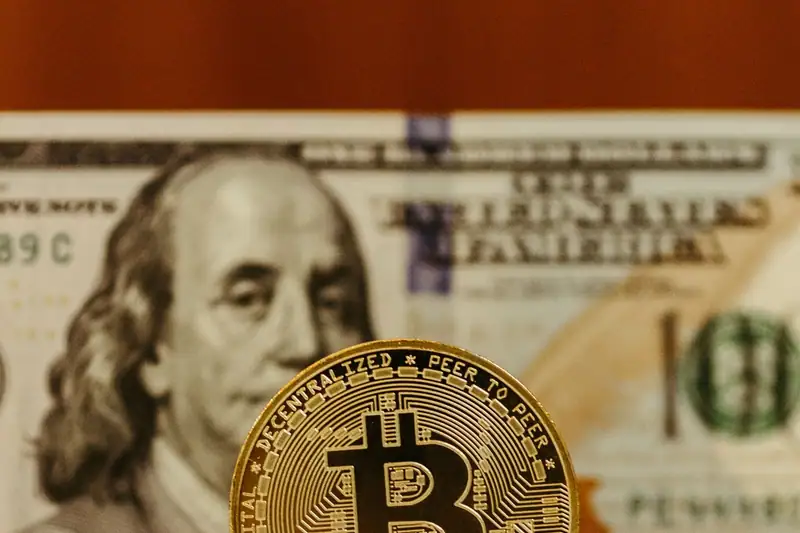
What keeps USDT near a dollar? Tether says its tokens are “pegged at 1-to-1 with a matching fiat currency” and “backed 100% by Tether’s Reserves”. But creating or redeeming USDT directly with Tether requires a verified account, a minimum of US$100,000 and a redemption fee of the greater of US$1,000 or 0.1%, according to Tether’s own fee page. In practice, South Africans never redeem with Tether: they sell on an exchange, and the peg is held mainly by large traders who can buy below a dollar and redeem, or mint and sell above it. That makes the exchange price the one that matters to you, and it means a USDT balance is a claim on a private company’s token, not a rand bank deposit.
Why the USDT/ZAR premium exists
The premium comes from exchange control. Adults may send up to R2 million a calendar year offshore under the SDA (from 8 April 2026) and a further R10 million with a SARS approval, but no more. Because rand can’t flow out freely, the local appetite for dollar exposure gets priced into USDT/ZAR. Traders who buy dollars or USDT offshore within their allowances and sell locally narrow the gap.
On 17 Nov 2026 at 08:32 UTC, USDT/ZAR was about 0.45% above the global USDT price in rand on VALR and 0.50% on Luno. The widget below tracks the live USDT/ZAR premium on Binance’s order book, plus the bitcoin premium on VALR and Luno.
ZAR crypto premium
Snapshot 17 Nov 2026, 12:20
Rand price on SA order books vs the global dollar price × the official USD/ZAR rate.
USDT/ZAR premium (Binance, live)
+0.50%
USDT/ZAR R17.0285 vs USD/ZAR R16.9593
- BTC on VALR
- +0.42%
- BTC on Luno
- +0.47%
BTC figures: build snapshot of 17 Nov 2026, 12:20, VALR/Luno last trade vs CoinGecko USD × open.er-api USD/ZAR.
Average BTC premium by year (zarbitrage.co.za data)
There’s no long public record of the USDT premium alone, but the bitcoin premium is a fair guide to how the local market behaves. zarbitrage.co.za data shows yearly averages above 8% in 2015 and 2017, below 3% every year since 2020, and 0.60% between January and 17 November 2026. On 19 July 2025 the local price even sat 12.94% below the global one. Our crypto arbitrage guide shows how traders work the gap and why the profit is thinner than adverts suggest.
Buying and selling USDT on a South African exchange is a domestic transaction. Sending it to a foreign exchange or your own wallet is less clear. On 15 May 2025 the Pretoria High Court held that crypto is neither “currency” nor “capital” under the Exchange Control Regulations (Standard Bank v SARB); that order is suspended while the Reserve Bank appeals. On 1 June 2026 the Johannesburg High Court held the opposite (Mangundhla v SARB). The SARB’s draft Crypto Asset Manual (comments closed 30 September 2026) would count such transfers against your SDA or foreign capital allowance. It is a draft, not law, and the SARB has said it is revising it.
The practical message: USDT doesn’t let you skip your allowances, and using someone else’s allowance through a “loan” is described in the draft manual as a simulated, illegal transaction. Our guide to exchange control and crypto explains what is settled and what is still open.
Exchange price vs P2P price
On a P2P market you trade USDT directly with another person: you pay them by bank transfer while the platform holds their USDT in escrow. Here is how P2P prices compared with VALR’s order book in a snapshot of the top 20 ads per side at 08:00 UTC on 17 Nov 2026.
| Where | You buy USDT at | You sell USDT at | Note |
|---|---|---|---|
| VALR order book | R17.0375 | about R17.037 | Deepest rand market |
| Binance P2P | from R17.40 | R17.07–R17.11 | Best buy ad 2.1% above VALR |
| Bybit P2P | R16.94–R17.90 | R17.02–R17.20 | One buy ad at R14.00, far off-market |
| OKX P2P | R17.77–R18.10 | R16.99–R17.10 | Cheapest buy ad 4.3% above VALR |
USDT/ZAR, 17 Nov 2026 around 08:00 UTC. P2P prices are advertised rates before any platform fees.
The pattern is clear. Buyers usually pay more on P2P: the best Binance and OKX ads were 2–4% over the order book, the price of being able to pay by ordinary bank transfer. Sellers can occasionally get a fraction more than VALR’s bid, but the extra few cents come with real risk. An ad priced far below the market, like the R14.00 one above, deserves suspicion: read its terms and the counterparty’s history before you engage.
The bigger risk is the money itself. In Wessels v Petrus, scammers posing as Capitec’s fraud department took R960,960.19 from a 67-year-old pensioner in 23 transactions, and the money landed in the Capitec account of a part-time Binance P2P USDT seller. The Pretoria High Court said the seller could not delegate his FICA duty to verify clients to Binance, and Capitec put a hold on his account. If you sell USDT on P2P, every rand you receive comes from a stranger. Our P2P crypto guide covers how to protect yourself.
If you searched for USDT to ZAR on Binance: its USDT/ZAR order book is its only active rand market, and it traded about 785,000 USDT (roughly R13.4 million) in the 24 hours to 07:41 UTC on 17 Nov 2026, at a last price of R17.0254. Binance’s local company has no FSCA licence (its application, FSP 53694, has been “processing” since 22 November 2023), so the FAIS Ombud is not your complaint route. Our Binance South Africa review explains what that means.
Selling USDT and withdrawing rand
Selling USDT for rand on a local exchange is straightforward. The difference between doing it well and doing it lazily is up to about R300 per 1,000 USDT.
-
Deposit USDT on a supported network
Open the USDT deposit screen on your South African exchange, choose a network it lists and copy that address. Send from the same network. A small test transfer first costs a few rand and can save the lot.
-
Sell on the USDT/ZAR market
A limit order is cheapest (Luno even pays makers 0.01% on USDT/ZAR; VALR charges makers 0.18%). A market order costs 0.20% on Luno and 0.35% on VALR. The one-tap screens cost 2% on Luno and 1.6% on VALR.
-
Withdraw to your own bank
VALR gives individuals 30 free normal withdrawals a month, then R8.50 each, or R30 for a fast withdrawal. Luno’s normal withdrawals are free; express costs R20 to banks on real-time clearing, R80 to others. Normal withdrawals take up to two business days.
Here’s a worked example using the 08:32 UTC prices on 17 Nov 2026. Selling 1,000 USDT at VALR’s bid of R17.0239 gives R17,023.90, minus the 0.35% taker fee (R59.58), so about R16,964. At Luno’s bid of R17.0336 you get R17,033.60 minus 0.20% (R34.07), so about R17,000. Through the one-tap screens you’d get roughly R16,752 on VALR and R16,693 on Luno. The order book paid about R210 to R310 more than the easy button.
Selling USDT is also a disposal for SARS, and because your cost and proceeds are in rand, the exchange rate creates the gain or loss. If you bought 1,000 USDT at R18.00 and sell at R17.02, you have a loss of about R980; if you bought at R16.00, you have a gain of about R1,020, even though USDT itself never moved. Our guide to cashing out crypto covers timings by bank, and the crypto tax guide shows how to report the result.
Paid in USDT: a freelancer’s route to rand
Take an illustrative example: a Cape Town designer whose client abroad settles a 2,000 USDT invoice instead of making an international bank transfer.
Before the client pays, send them three things from your exchange’s deposit screen: the network, the matching address, and your full name exactly as it appears on your exchange account. The name matters because of the travel rule. Under the FIC’s guidance, an exchange that receives a transfer without the sender’s and recipient’s details may hold it until the data arrives, or reject it and send it back. If the client pays from an offshore platform that doesn’t pass on travel-rule data, expect a delay or questions, so agree on a small test payment first.
Then the tax. SARS treats being paid in crypto as a barter transaction, so what you earned is the rand value of the USDT when it arrived. If the 2,000 USDT lands when USDT/ZAR is R17.02, that’s R34,040 of income, declared like any other freelance fee. Selling later is a separate event measured from that value. Sell a week later at an illustrative R16.80 on Luno’s order book and you receive 2,000 × R16.80 less the 0.20% fee, about R33,533. That shortfall of roughly R507 is generally a loss on the sale, not a reduction in the fee you earned; had the rand weakened instead, you’d have a small gain to report. A tax practitioner can confirm how it applies to you.
Keep the invoice, the client’s payment details and the exchange’s deposit record together. Exchange control rules for crypto arriving from abroad are still being written: the SARB’s draft manual would make some inward transfers reportable, but it isn’t law. A paper trail showing that each payment was for work done answers most questions from an exchange, a bank or SARS.
Need dollars in crypto form?
Buy USDT in rand on a local order book, then send it to our top-rated exchange if you want about 300 coins plus savings and staking. Test with a small amount first.
How to buy USDT in SAOur #1 pick · US FinCEN MSB · NMLS 1804170 · UK FCA reg. FRN 1007192
Network fees when sending USDT
USDT exists on several networks, including TRC-20 on Tron and ERC-20 on Ethereum. The address format and the fee differ by network, and sending on a network the receiving platform doesn’t support can lose the coins. Choosing between them is covered in our guide on how to buy USDT in South Africa; here is what the fees do to your rand.
- ChainEX charges 3 USDT to withdraw USDT on ERC-20 (fee schedule dated February 2026).
- Altify charges 10 USDT per USDT withdrawal at its entry level.
- Luno charges a dynamic send fee: the current blockchain fee plus its own processing cost, shown before you confirm.
- VALR shows a variable crypto withdrawal fee on the withdrawal screen, and transfers from one VALR account to another are free.
A fixed fee hurts small transfers most. Three USDT is 3% of a 100-USDT transfer but only 0.06% of 5,000 USDT. If you’re moving small amounts often, it may be cheaper to sell where the USDT already sits and move rand instead.
Every transfer also carries paperwork now. Under the FIC’s travel rule guidance of 30 March 2026, South African exchanges must collect sender and recipient details for every crypto transfer, with no minimum amount, including transfers to your own wallet, and must reject outgoing transfers where the details are missing. Luno also applies send limits by verification level, from about US$2,400 per 24 hours at Level 1 to US$120,000 at Level 3. Our travel rule guide explains what you’ll be asked.
If a USDT deposit hasn’t arrived
Most missing USDT isn’t lost. Work through these checks first:
- Find the transaction ID (hash) in the sending platform’s history and paste it into the network’s public explorer, such as Tronscan for TRC-20 or Etherscan for ERC-20. If it shows as confirmed, the coins have left; if it’s pending or missing, the problem is on the sending side.
- Check that the networks matched. TRC-20 addresses start with a “T” and ERC-20 addresses with “0x”, so a mismatch is often visible at a glance. If the coins went out on a network your exchange doesn’t list for USDT, contact support with the hash, but don’t count on recovery: it’s at the exchange’s discretion.
- Look for a travel-rule prompt. Exchanges may hold an incoming transfer until the sender’s details are supplied, and the request often sits in an in-app message or an email rather than on the deposit screen.
- Allow for confirmations. Each exchange decides how many network confirmations it waits for before crediting a deposit. A short wait is normal; if the explorer has shown the transfer as confirmed for hours, it’s time to ask.
If all four check out and the coins still aren’t there, open a ticket with the hash, the amount, the network and the time. Use only the exchange’s own app or website. People who post about a missing deposit on social media are a favourite target for fake “support agents” who ask for a seed phrase or for remote access to your device, the same AnyDesk trick used on the pensioner in the Wessels case. Our crypto scams guide shows how these approaches work.
Who USDT doesn’t suit
USDT is useful, but it isn’t a rand savings account with a dollar sticker. Its rand value moves with the exchange rate every day: 1,000 USDT worth R17,020 at our snapshot would be worth about R16,169 if the rand strengthened 5%, before any fees to get out. If you need a fixed rand amount for rent or school fees in the next few months, rand in the bank is the steadier place for it.
Holding it on an exchange also adds a second dependency: you rely on the platform as well as on Tether. Luno publishes monthly proof-of-reserves attestations by the audit firm Moore, and VALR had a reserves audit by Hacken completed in August 2025; both help, but neither is a guarantee. For people who want dollar exposure or earn in dollars, and accept those trade-offs, it does the job cheaply. It won’t get you around the SDA.
The short version
The USDT to ZAR rate is the dollar rate plus a small local premium, and on most days the order book on VALR or Luno is the cheapest place to buy or sell it. P2P costs buyers 2–4% more and exposes sellers to stolen money, the one-tap screens cost 1.6–2%, and every network transfer has a fee that matters more the smaller the amount. If you want the same maths for bitcoin, our bitcoin to rand page works through sats, spreads and the bitcoin premium.
Frequently asked questions
Is 1 USDT always worth 1 US dollar in rand?
Where do I get the best USDT to ZAR rate?
How do I sell USDT for rand?
Why is USDT more than the dollar rate?
Can I use USDT to send money out of South Africa?
I was paid in USDT. Is that taxable?
Which network should I use to send USDT?
Sources we checked
- ↗SARS — Crypto assets & tax
- ↗Tether — Transparency
- ↗Tether — Fees (issuance and redemption)
- ↗VALR — What are VALR's charges?
- ↗Luno — Fees and limits in South Africa
- ↗VALR public API — market summary
- ↗SARB — Exchange Control Circular 6/2026 (SDA raised to R2 million)
- ↗SARB — Draft Crypto Asset Manual for cross-border activities
- ↗FIC — PCC 61: travel rule for crypto asset service providers
- ↗Luno — Proof of reserves
- ↗VALR — Proof of reserves audit
- ↗Moonstone — Wessels v Petrus (Binance P2P fraud case)
- ↗ChainEX — Fees
Risk note: crypto prices can fall sharply and you can lose all the money you put in. This page is general information, not financial or tax advice. Fees, limits and licences change; check them on the provider’s site and the FSCA register before you act.