
South Africa is the most active crypto market on the continent: Chainalysis ranked it 9th of 117 countries in its 2026 adoption index, Luno alone reports 6.3 million South African users, and the FSCA had licensed 310 crypto firms by March 2026. If you want to buy crypto in South Africa, you no longer have to guess which platform is legitimate. You do still have to choose well, because the differences in fees, rand deposits and withdrawals are large, and they decide how much of your money actually ends up as Bitcoin or USDT.
This page is the map. It shows the ten exchanges South Africans actually use, with their licence numbers and real rand fees, the four ways to pay, live prices in rand, the rules from the FSCA, FIC, Reserve Bank and SARS, and where each city fits in. Every number below was checked on the provider’s own page or a regulator’s register on 17 November 2026.
Quick answer: the fastest legal ways to buy crypto with rand
The short version for a first purchase looks like this. It takes about 15 minutes if your ID and proof of address are to hand.
-
Pick a platform and check its licence
Choose from the table below. For a local exchange, type its FSP number into the FSCA’s online FSP search and check that the status says “Authorised” and the products include crypto assets. Our FSCA licence check guide walks you through it.
-
Open an account and verify
You’ll upload a South African ID or passport, take a selfie and, at higher limits, add proof of address. This is FICA, and every legitimate platform asks for it.
-
Fund it
Pay by EFT (free, up to two business days), instant EFT or a bank’s own Pay button (minutes, about 1.25–1.4%), or a card in rand on a local exchange (seconds, around 3.9%). Cards are for local exchanges only: Reserve Bank rules bar South African cards from funding offshore crypto accounts.
-
Buy, then decide where to keep it
Use the order book rather than the one-tap “buy” button if you can: instant buy costs 1.6–2% on the big local apps, the order book a fraction of that. Small amounts can stay on a licensed exchange; larger amounts belong in a wallet you control.
Top 10 crypto exchanges in South Africa (comparison table)
These are the platforms South Africans use most, ranked for a typical rand buyer who wants low costs, a clear licence position and a simple way back to the bank. Licence numbers come from the FSCA register; fees from each exchange’s published fee page.
Top crypto exchanges for South Africans
FSCA register and fee pages checked 17 Nov 2026
- Top pick 1

~300 assets · Coins SA exchanges don’t list, plus savings and staking
- FSCA licence
- Not FSCA · US FinCEN/NMLS, UK FCA
- Rand in
- Crypto transfer (no ZAR)
- Rand out
- Via a local exchange
- Trading fee
- Tiered, see site
-
- FSCA licence
- FSP 53308
- Rand in
- Free EFT · card 3.9%
- Rand out
- 30 free/month, then R8.50
- Trading fee
- 0.18% / 0.35%
-
- FSCA licence
- FSP 53314
- Rand in
- Free EFT · Capitec/Absa Pay
- Rand out
- Free · express R20
- Trading fee
- 0.40% / 0.60%
-
- FSCA licence
- FSP 53922
- Rand in
- EFT (SN reference)
- Rand out
- 3 payout runs a day
- Trading fee
- See site
- 5

Broad altcoin list · Capitec customers and altcoin hunters
- FSCA licence
- FSP 53614
- Rand in
- EFT, Capitec/Absa Pay · 0.5%
- Rand out
- R16 + 0.5%
- Trading fee
- See site
-
- FSCA licence
- FSP 55680
- Rand in
- Instant EFT (Ozow)
- Rand out
- ZAR P2P
- Trading fee
- See site
-
- FSCA licence
- Not licensed (processing)
- Rand in
- USDT/ZAR, P2P
- Rand out
- Mostly P2P
- Trading fee
- See site
-
- FSCA licence
- FSP 22588
- Rand in
- Free EFT
- Rand out
- Free
- Trading fee
- 0.25% + 0.075% + VAT
-
- FSCA licence
- FSP 53799
- Rand in
- See site
- Rand out
- R8.50
- Trading fee
- 0.10% taker
-
- FSCA licence
- FSP 53289
- Rand in
- Bank deposit 0.50%
- Rand out
- R10
- Trading fee
- 0.50%


Licence numbers from the FSCA register; fees from each exchange’s own fee page, checked 17 November 2026. Two fees mean maker / taker on rand pairs at the entry tier; “see site” means we could not verify the figure. Logos belong to their owners and identify the services we compare.
The table hides as much as it shows, so a few things are worth spelling out. VALR has the deepest rand market by a distance: on 17 November 2026 its ZAR pairs traded about R284 million in 24 hours, R259.5 million of it in USDT/ZAR. Deep markets mean smaller price jumps when you buy, which matters more than a 0.1% fee difference. Luno has the biggest user base and the friendliest app, but its taker fee of 0.60% on crypto/rand pairs at the entry tier is the highest of the big three. Binance still runs a USDT/ZAR market and the largest rand P2P market, but its local company’s licence application has been “processing” since 22 November 2023.
If you are torn between the three names everybody mentions, our Luno vs VALR vs Binance comparison puts fees, deposits and licences side by side.
Why our #1 pick ranks first — and what it does not have
Our top-rated platform is CEX.IO, a global exchange operating since 2013. It ranks first for a specific kind of user: someone who wants about 300 coins, including many that local exchanges don’t list, plus savings and staking.
It is legal to use from South Africa — South Africa is not on its list of unsupported countries — and it is licensed or registered abroad: a FinCEN money services business and NMLS ID 1804170 in the United States (with more than 30 state money-transmitter licences), and an FCA cryptoasset registration (FRN 1007192) in the UK. Savings and staking are available to South African residents.
Here is what it does not have, so you can decide with open eyes. It has no FSCA licence, so the FAIS Ombud is not your complaint route. It has no rand wallet, so there are no rand deposits or withdrawals. South Africans typically fund it by buying USDT or BTC in rand on a South African exchange and sending the coins across, with the travel-rule details the sending exchange asks for; the 2026 draft exchange control rules would count such transfers against your SDA, though they are still drafts. Don’t reach for your card: the Reserve Bank’s Currency and Exchanges Manual says South African cards “may not be used to fund any international trading accounts, including crypto assets trading accounts”, and banks may decline such payments. When you want rand back in your bank account, you send the coins to a local exchange and sell there. The full CEX.IO review covers each point.
Want more coins than the local books carry?
Buy USDT or BTC in rand on a local exchange, send it across and reach about 300 coins plus savings and staking. Start with a small test transfer.
Compare all 10 firstOur #1 pick · US FinCEN MSB · NMLS 1804170 · UK FCA reg. FRN 1007192
Four ways to pay: instant EFT, card, P2P, bank app
Rand reaches an exchange in four main ways. Speed and cost pull in opposite directions, so choose by how much you’re buying and how quickly you need it.
| Route | How fast | Typical cost | Best for |
|---|---|---|---|
| Normal EFT | Hours to 2 business days | Free on Luno and VALR; 0.5% (max R95) on AltCoinTrader | Larger, planned buys |
| Instant EFT / bank Pay button | Minutes | Luno: 1.4% instant or Absa Pay; Capitec Pay 1.25% under R1,000, R9 above | Capitec clients, quick top-ups |
| Debit or credit card | Seconds | About 3.9% on Luno and VALR, billed in rand | First purchase, small amounts |
| P2P with escrow | 15–60 minutes | Price 2–4% above the exchange rate (17 Nov 2026 snapshot) | When nothing else works |
Typical costs on 17 Nov 2026. Your bank may add its own charges.
Three traps catch new buyers. First, Capitec blocks ordinary transfers to crypto exchanges in its app (“Payments to this beneficiary are not allowed”), so Capitec clients use Capitec Pay where the exchange offers it — Luno and AltCoinTrader do. Second, PayShap is everywhere in South African banking now, but we could not find a single exchange that accepts PayShap deposits. If a site tells you otherwise, check the exchange’s own help pages. Third, cards stop at the border: the Reserve Bank’s rules say South African cards may not fund offshore crypto trading accounts, so card buys belong on local exchanges, in rand. The full breakdown, bank by bank, is in our guide to ZAR deposits.
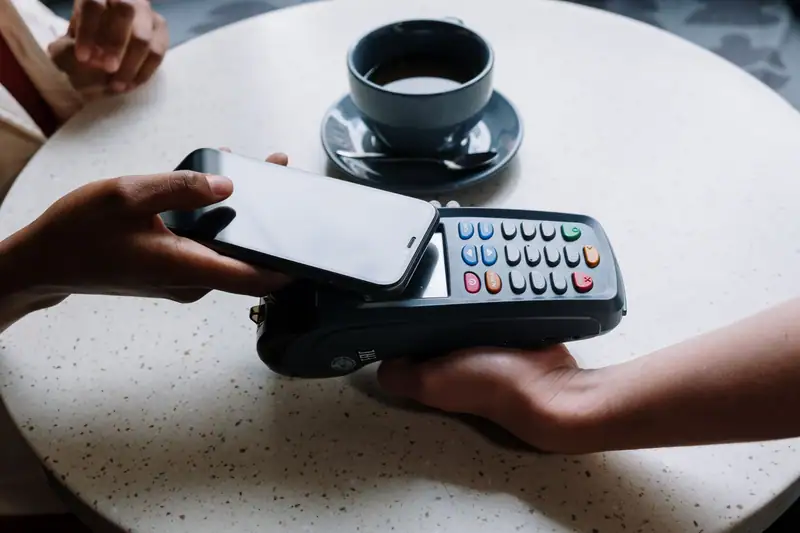
P2P deserves a word of caution. On a P2P market you pay another person by bank transfer while the platform holds their coins in escrow. It works, but it is where most South African crypto fraud happens: stolen money paid into a seller’s account, fake proof-of-payment screenshots, and the Pretoria High Court case of a pensioner who lost R960,960 through a scam that ran through a P2P seller’s Capitec account. Use it only if you understand the risks.
How to choose in five minutes
Most people pick the exchange a friend uses. Four honest answers will point you to a better fit.
Who do you bank with? This decides your cheapest way in: Capitec clients are really choosing between platforms that take Capitec Pay. FNB clients can buy five coins inside the banking app from R10 but can’t move them out, Discovery clients can link a Luno account, and Standard Bank clients will find VALR already on the pre-approved beneficiary list.
How much, and how often? On a one-off R300, the convenient button costs a few rand more than the order book. On R2,000 every month, the gap between a 2% instant buy and a 0.35% order-book trade is R33 a month, close to R400 a year.
Which coin? Bitcoin and USDT trade against rand on every big local exchange. If your coin has no rand pair, you pay a second trading fee to reach it, or you need a platform with a longer list, funded with crypto from a local exchange.
Do you want a South African regulator in your corner? If a complaint route to the FAIS Ombud matters to you, stay with an FSCA-licensed platform. A platform licensed abroad is legal to use, but your complaint then goes to the company itself.
That usually leaves two candidates. Verify on both and let a small deposit and a test withdrawal decide.
Your first R500: a realistic walkthrough
Here is an illustrative example, not a real person. Thandi lives in Soweto, banks with Capitec and wants R500 of bitcoin on Luno. Luno’s first verification level allows R15,000 in total, far more than she needs. Because Capitec’s app won’t send an ordinary transfer to an exchange, she pays with Capitec Pay, which costs 1.25% under R1,000: R6.25, leaving R493.75 in her Luno wallet. The button she presses next decides the rest.
| How she buys | Fees | Bitcoin she gets | Total cost |
|---|---|---|---|
| Card instant buy (3.9%) | R19.50 | R480.50 | 3.9% |
| Capitec Pay, then instant buy (2%) | R6.25 + R9.88 | R483.87 | 3.2% |
| Capitec Pay, then order book as a taker (0.60%) | R6.25 + R2.96 | R490.79 | 1.8% |
Luno's fees page, checked 17 Nov 2026. The bitcoin column shows the rand value of the coins at the moment of purchase.
On R500 the gap is about R10. On R5,000 the same three routes cost R195, about R109 and about R39, partly because a Capitec Pay deposit above R1,000 is a flat R9, so fewer, larger top-ups are cheaper.
Two habits finish the job. Before her second purchase she sells a small amount and withdraws it to Capitec to prove the route works; Luno’s normal withdrawals are free and take up to two business days. And she saves the confirmation showing the rand spent, the fee and the bitcoin received: the start of her base cost record for SARS.
If the Capitec Pay approval times out, or the money leaves her account but doesn’t show on Luno, she doesn’t pay again. She contacts Luno’s support with the transaction details from her banking app and ignores anyone on social media offering to “speed it up”.
Live rand prices and the ZAR premium
Prices below come from global averages and refresh every minute while the page is open. If the price feeds are down, you’ll see the last snapshot with its time.
| Coin | Price in rand | In US$ | 24h |
|---|---|---|---|
 Tether USDT | R16.94 | $0.9991 | +0.13% |
 Bitcoin BTC | R1,090,611 | $64,318 | +0.08% |
 Ethereum ETH | R30,551 | $1,802 | +0.25% |
 XRP XRP | R16.23 | $0.9572 | +1.24% |
 Solana SOL | R1,229 | $72.46 | +2.24% |
Snapshot 17 Nov, 12:20 SAST
Notice that prices on South African order books are usually a little higher than the global price converted at the official rate. That gap is the ZAR premium, and it exists because exchange control limits how much money residents can move offshore. In 2015 and 2017 the yearly average was above 8%, and on single days it went past 35%. On 17 November 2026 it was about 0.5% for bitcoin on VALR and Luno. Our crypto arbitrage guide shows the live figure and explains the cost maths, and the Bitcoin to rand converter compares local and global prices.
Is crypto legal in South Africa? FSCA, FIC, SARB and SARS in plain English
Yes, and since 2022 it is properly regulated. Four bodies matter to you, each for a different reason.
| Who | What they do for crypto | What it means for you |
|---|---|---|
| FSCA | Licenses crypto firms under the FAIS Act since 19 Oct 2022 | Check the FSP number before you deposit |
| FIC | Anti-money-laundering rules; the travel rule since 30 Apr 2025 | Expect questions when you send crypto to another platform |
| SARB | Exchange control: SDA R2m a year, R10m with SARS approval | Large offshore transfers need planning |
| SARS | Taxes gains as income or capital | Keep records; declare on your ITR12 |
By 31 March 2026 the FSCA had received 533 licence applications from crypto firms, approved 310 and declined 17, and it had opened 81 investigations into firms operating without one. The licence means the firm follows conduct rules and that complaints can go to the FAIS Ombud. It does not mean your money is insured, and it does not protect you from a falling price.
The travel rule is the change most people notice. Since 30 April 2025, South African exchanges must collect and pass on the sender’s and recipient’s details with transfers, and the FIC’s final guidance of 30 March 2026 applies it to every transfer, including to your own wallet. If the receiving platform can’t supply the data, the transfer may be rejected. Our page on whether crypto is legal in South Africa covers the whole framework, including the two court cases that disagree on whether crypto counts as “currency” under the Exchange Control Regulations.
Banks: who is crypto-friendly now
The old fear that a bank would close your account for buying bitcoin has mostly faded. Some banks now sell crypto themselves.
- FNB added crypto trading to its share-investing platform on 6 October 2026, run by VALR: Bitcoin, Ether, XRP, Solana and USDT from R10, but you can’t move the coins out.
- Discovery Bank has linked to Luno since December 2025.
- Absa announced institutional crypto custody in September 2026 and offers Absa Pay deposits on Luno and AltCoinTrader.
- Standard Bank lists VALR as a pre-approved beneficiary for EFTs.
- Capitec blocks direct transfers to exchanges; use Capitec Pay.
- Nedbank signed a rand-to-USDC deal with Crypto.com in March 2026, which was not live when we checked.
Our bank-by-bank guide to crypto-friendly banks explains what each one allows and what to do if a transfer is stopped.
Taxes: what SARS expects from you
SARS doesn’t have a special crypto tax. It applies the normal rules, and that catches people out in two places. First, swapping one coin for another is a taxable event, even though no rand changed hands. Second, whether your profit counts as a capital gain or as income depends on your intention and how often you trade, not on what you call yourself.
The normal income tax rules apply to crypto assets, and taxpayers must declare crypto gains and losses in their returns. From 1 March 2026 exchanges also collect your tax details under the CARF reporting framework, with their first reports to SARS due by 31 May 2027.
For an investor, 40% of the net gain above the annual exclusion (R50,000 from the 2026/27 tax year under the Budget 2026 proposal) is added to taxable income, so the most you pay is 18% of the gain. A frequent trader pays income tax at up to 45%. Our crypto tax guide works through examples in rand, and the crypto tax calculator gives you an estimate in seconds.
What changes if you earn in dollars
A second illustrative case: a Cape Town freelancer whose overseas client pays a US$1,000 invoice in USDT, a dollar stablecoin. Three things change.
Receiving. Give the client your South African exchange’s deposit address and name the network, for example TRC-20; a mismatch can lose the coins. Under the FIC’s travel-rule guidance a local exchange may hold an incoming transfer until it has the sender’s details, so ask for a small test payment first.
Converting. On the morning of 17 November 2026, 1,000 USDT sold into Luno’s best bid of R17.04 would have brought R17,040, less the 0.20% taker fee of R34.08: R17,005.92. On VALR, at a bid of R17.0374 and a 0.35% taker fee, the same sale came to R16,977.77. Normal rand withdrawals are free on both. P2P buyers sometimes offer a few cents more, but their money comes from a stranger’s account; in the Pretoria pensioner case, the P2P trader who received the stolen rand had his account put on hold by his bank.
Tax. SARS treats crypto received for goods or services as a barter transaction, so the rand value of the USDT on the day you’re paid is income, declared like any other freelance income. If you hold the USDT and later sell it for more or fewer rand, that difference can be a separate gain or loss. Keep the invoice, the exchange’s deposit record and the rand price on the day.
Cities: Cape Town, Johannesburg, Pretoria and Durban
Crypto works the same way nationally, but each city has its own texture. Cape Town is home to Luno, OVEX and Altify, with MoneyBadger in nearby Stellenbosch and the bitcoin village of Witsand further along the coast. Johannesburg has VALR and Bybit SA in the same Sandton building and AltCoinTrader in Roodepoort. Pretoria is where the regulators sit: the FSCA, the Reserve Bank and SARS all have their head offices there. Durban has no crypto exchange of its own that we could confirm, but every national route works the same there. Tap a province or city to jump to its guide.
Province
Eastern Cape
ChainEX is registered in Jeffreys Bay. The national routes — EFT, instant EFT, card and P2P — work the same here.
Province
Free State
No local crypto firm confirmed. Online exchanges, EFT and card purchases work exactly as in the big metros.
City guide
Gauteng
VALR and Bybit SA in Sandton, AltCoinTrader in Roodepoort, EasyEquities in Rosebank — and the FSCA, SARB and SARS head offices in Pretoria.
City guide
KwaZulu-Natal
We could not confirm a crypto exchange headquartered in KZN. Everything national works here: EFT, instant EFT, cards, P2P and pay-with-crypto tills.
Province
Limpopo
No local crypto firm confirmed. Use the national routes: EFT, instant EFT, card or P2P with escrow.
Province
Mpumalanga
No local crypto firm confirmed. Use the national routes: EFT, instant EFT, card or P2P with escrow.
Province
North West
No local crypto firm confirmed. Use the national routes: EFT, instant EFT, card or P2P with escrow.
Province
Northern Cape
No local crypto firm confirmed. Buy online with EFT or a card; Pick n Pay tills with MoneyBadger take crypto payments countrywide.
City guide
Western Cape
Home of Luno (Observatory), OVEX and Altify (Cape Town), and MoneyBadger (Stellenbosch). Witsand and Bitcoin Ekasi (JCC Camp, Mossel Bay) are known for everyday bitcoin payments.
Tap a province or a red dot. Green provinces have a city guide.
Top coins South Africans buy
The rand order books tell you what South Africans really trade. On VALR, USDT/ZAR made up more than 90% of all rand volume on 17 November 2026: people use the dollar stablecoin as a savings account, a way to move value, and a stepping stone into other coins. Bitcoin is a distant but solid second, then XRP, Ether and Solana.
R259.5m
USDT/ZAR traded on VALR in 24h
17 Nov 2026, VALR public API
R8.97m
BTC/ZAR traded on VALR in 24h
17 Nov 2026
61
coins on Luno for South African users
Luno fees page, 12 Nov 2026
Our ranking of the top cryptocurrencies in South Africa explains each coin’s risk, and the coin guides for Bitcoin, USDT, Ethereum and XRP walk through buying each one with rand.
Safety checklist before your first purchase
Ten minutes now saves a lot of pain later
- 1 Check the FSP number on the FSCA register yourself — never trust a screenshot
- 2 Turn on app-based 2FA, not SMS, the day you open the account
- 3 Start with a small test amount, including a test withdrawal back to your bank
- 4 Never share a seed phrase or OTP — real support never asks
- 5 Ignore celebrity ads promising returns: deepfakes are the most common lure
- 6 Only pay from and withdraw to a bank account in your own name
- 7 Save every statement and trade export for SARS
- 8 Treat guaranteed returns or 'arbitrage clubs' as a red flag
Most losses we read about in South Africa came from scams, not from exchanges failing: Mirror Trading International took in at least 29,421 bitcoin before it was declared an unlawful Ponzi scheme, and the FSCA fined Banxso R2 billion in December 2025 over trading scams pushed with deepfake adverts. Our page on crypto scams in South Africa shows how to check any platform in a minute.
How we rate exchanges
We rank platforms on what a South African rand buyer actually pays and risks: licence position (FSCA, or licensed abroad and openly serving South Africa), how rand gets in and out and what that costs, trading fees at the entry tier, depth of the rand market, coin range, and documented incidents. We check licence numbers on the FSCA register and fees on each provider’s own pages, and we say so when a figure can’t be verified.
Ranking first doesn’t make a platform right for everyone. If you want an FSCA licence and free rand withdrawals, VALR or Luno will suit you better; if you want a wide coin list plus savings and staking, and don’t mind funding it with crypto from a local exchange, our top pick will. Whatever you choose, the best crypto exchanges in South Africa page is the place to compare before you commit.
Explore every guide
Exchanges
Rankings, reviews and licence checks.
Buy & sell
Getting rand in, crypto out and paying with it.
Coins & prices
Live rand prices and coin guides.
Tax & law
SARS, FSCA, exchange control and scams.
Learn
Trading, investing, mining, terms.
Cities
Local guides with real local facts.
Buy crypto in South Africa the simple way
Buy in rand at home, send USDT or BTC to our top-rated exchange for the wider coin list, and keep every receipt — SARS will want the cost price later.
Prefer EFT? See ZAR depositsOur #1 pick · US FinCEN MSB · NMLS 1804170 · UK FCA reg. FRN 1007192
Frequently asked questions
What is the best crypto exchange in South Africa?
Is crypto legal in South Africa?
What is the quickest way to buy crypto with rand?
Do I pay tax on crypto in South Africa?
Which banks allow crypto purchases?
Can I buy crypto with a credit card in South Africa?
What is the ZAR premium?
How do I cash out crypto to my bank account?
Sources we checked
- ↗FSCA — Declaration of crypto assets as a financial product (GN 1350 of 2022)
- ↗SARS — Crypto assets & tax
- ↗Luno — South African fees and limits
- ↗VALR — Fees
- ↗Luno — Public tickers API (USDT/ZAR bid, 17 Nov 2026)
- ↗VALR — Public market summary API (USDT/ZAR bid, 17 Nov 2026)
- ↗FIC — PCC 61: travel rule for CASPs (30 Mar 2026)
- ↗Chainalysis — 2026 Global Crypto Adoption Index
- ↗CEX.IO — unsupported countries list
- ↗SARB — Currency and Exchanges Manual for Authorised Dealers (B.2(p)–(q), B.16(E)(v))
Risk note: crypto prices can fall sharply and you can lose all the money you put in. This page is general information, not financial or tax advice. Fees, limits and licences change; check them on the provider’s site and the FSCA register before you act.