On this page
- BTC to ZAR conversion table
- Why prices differ between sites
- Global price vs SA exchanges: the ZAR premium
- Bid, ask and spread
- Your break-even price in rand
- Sats to rand
- How to convert bitcoin to rand in your bank account
- Timing a sale: nights, weekends and public holidays
- What moves the BTC/ZAR price
- Three mistakes that cost more than the fee
- FAQ
At 08:32 UTC on 17 November 2026, bitcoin to rand worked out at about R1,090,842 for 1 BTC at the global average price (CoinGecko). South African order books were slightly higher: the last trade was R1,096,582 on VALR and R1,098,899 on Luno. The converter at the top of the page uses the live global price and refreshes every minute, so it will already show a different number. Type any rand amount to see how much bitcoin it buys, or flip the arrows to see what your bitcoin is worth in rand.
A converter gives you a reference price, not the price you will trade at. This page explains the gap: where each number comes from, why Luno and VALR usually sit a little above Google, how the spread and fees eat into a small purchase, what a single sat is worth, and how to get the rand from a sale into your bank account without paying more than you need to.
BTC to ZAR conversion table
The maths is simple: bitcoin = rand ÷ price of 1 BTC, and rand = bitcoin × price of 1 BTC. The tables below use the global price of R1,090,842 per BTC (CoinGecko, 17 Nov 2026 08:32 UTC). For today’s numbers, use the converter or divide by the live price yourself.
| You spend | BTC at the global price | In sats | Sats after a 1.6% instant buy on VALR |
|---|---|---|---|
| R100 | 0.00009167 | 9,167 | about 8,973 |
| R500 | 0.00045836 | 45,836 | about 44,867 |
| R1,000 | 0.00091672 | 91,672 | about 89,733 |
| R5,000 | 0.00458362 | 458,362 | about 448,667 |
| R10,000 | 0.00916723 | 916,723 | about 897,334 |
Rand to bitcoin at R1,090,842 per BTC (CoinGecko, 17 Nov 2026 08:32 UTC). The last column uses VALR's ask of R1,096,582 at the same moment and its 1.6% Simple Buy fee.
Going the other way, here is what common amounts of bitcoin were worth at the same moment, at the global average and at the last trade on each local order book.
| Bitcoin | Global (CoinGecko) | VALR last trade | Luno last trade |
|---|---|---|---|
| 0.001 BTC | R1,090.84 | R1,096.58 | R1,098.90 |
| 0.01 BTC | R10,908.42 | R10,965.82 | R10,988.99 |
| 0.1 BTC | R109,084.20 | R109,658.20 | R109,889.90 |
| 1 BTC | R1,090,842 | R1,096,582 | R1,098,899 |
Bitcoin to rand, 17 Nov 2026 08:32 UTC. Local columns show each exchange's last traded price, before fees.
Two things stand out. The local columns are higher, by roughly R5,700 to R8,000 per whole bitcoin. And the instant-buy column in the first table lands about 2% below the global figure: on a small purchase, the fee and the local premium together cost far more than any difference between price websites.
Why prices differ between sites
Search for the bitcoin price in rands and you’ll get one number from Google, another from CoinGecko, a third from Luno and a fourth from VALR, sometimes within the same minute. None of them is wrong. They measure different things.
- Global average vs one order book. CoinGecko and similar sites blend prices from many exchanges worldwide, mostly quoted in US dollars, and convert them to rand. Luno and VALR show the last trade on their own BTC/ZAR market, where only rand changes hands.
- Which dollar rate. A global price in rand is only as good as the USD/ZAR rate behind it. The three free reference rates available on the morning of 17 Nov 2026 put the dollar at R16.943 (the ECB’s reference rate), R16.959 and R16.976, a 0.2% spread before bitcoin had moved at all.
- Last trade vs what you can trade at. The headline number on an exchange is usually the last trade. What you will actually pay is the lowest sell order (the ask); what you’ll get when you sell is the highest buy order (the bid).
- Timing. Our converter refreshes every minute; some apps and search results cache prices for longer. In a fast market, a minute is enough for a 0.5% move.
- Fees. No price site includes your fee, and fees run from 0.35% to 3.9% depending on how you buy.
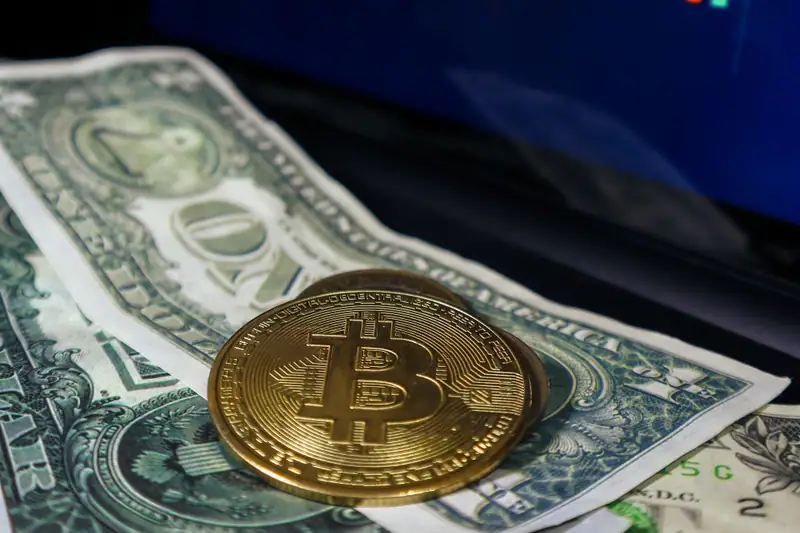
So when someone in the family WhatsApp group says bitcoin is “R1.1 million on Luno but R1.09 million on Google”, both can be true at once. The useful question is which price you can actually trade at, and what it will cost you to do it.
Global price vs SA exchanges: the ZAR premium
To compare like with like, take bitcoin’s dollar price and convert it at the official rate. At 08:32 UTC on 17 Nov 2026 that was US$64,369 × R16.9593 = R1,091,654. VALR’s last trade was 0.45% above that and Luno’s 0.66% above. That gap is the ZAR premium.
It exists because of exchange control. South African adults may send up to R2 million a year offshore under the SDA (from 8 April 2026), and a further R10 million with SARS approval, but not unlimited amounts. Rand therefore can’t flow freely to wherever bitcoin is cheapest. When local demand outruns what traders can bring in from abroad, local prices drift above the global price; traders who buy offshore and sell locally narrow the gap again.
ZAR crypto premium
Snapshot 17 Nov 2026, 12:20
Rand price on SA order books vs the global dollar price × the official USD/ZAR rate.
USDT/ZAR premium (Binance, live)
+0.50%
USDT/ZAR R17.0285 vs USD/ZAR R16.9593
- BTC on VALR
- +0.42%
- BTC on Luno
- +0.47%
BTC figures: build snapshot of 17 Nov 2026, 12:20, VALR/Luno last trade vs CoinGecko USD × open.er-api USD/ZAR.
Average BTC premium by year (zarbitrage.co.za data)
The premium used to be big. zarbitrage.co.za data puts the yearly average at 8.56% in 2015 and 8.65% in 2017, with an all-time high of 55.77% on 14 January 2015 and 35.58% on 19 December 2017. Since 2020 the yearly average has stayed below 3%, and between January and 17 November 2026 it averaged 0.60%. It can also flip: on 19 July 2025 bitcoin traded at a 12.94% discount locally.
Why should an ordinary buyer care? If you buy at a 0.5% premium and later sell when the premium is zero, you lose that 0.5% on top of your fees, and the reverse works in your favour. Our crypto arbitrage guide explains how traders try to capture the premium and what it really costs once fees, allowances and tax are counted.
Bid, ask and spread
Every order book has two prices at any moment. The bid is the highest price a buyer is offering; the ask is the lowest price a seller will accept. You buy at the ask and sell at the bid (bid and ask), and the gap between them, the spread, is a cost you pay even when the trading fee is zero.
On BTC/ZAR the two biggest books are usually very tight. At 08:32 UTC on 17 Nov 2026 VALR showed a bid of R1,096,581 and an ask of R1,096,582, and Luno R1,098,899 and R1,098,900: a spread of R1 on a million-rand coin. That isn’t guaranteed. Fifty-one minutes earlier, at 07:41 UTC, Luno’s book showed R1,101,167 bid and R1,102,797 ask, a gap of R1,630 or about 0.15%. Check the spread before you trade, especially late at night or when the market is jumping.
Then comes the fee, which depends on how you place the order:
- A market order on the order book pays the taker fee: 0.35% on VALR and 0.60% on Luno’s crypto/rand pairs at the entry tier.
- A limit order that waits on the book pays the maker fee: 0.18% on VALR and 0.40% on Luno. You may wait, but you choose the price.
- The one-tap Buy and Sell screens are simpler and dearer: 1.6% on VALR (Simple Buy/Sell) and 2% on Luno (instant buy and sell from the Portfolio screen).
Say you sell 0.05 BTC. On VALR at the 08:32 UTC bid that is about R54,829: the order-book fee is roughly R192, while Simple Sell would cost about R877. On Luno, the instant-sell fee on the same amount comes to about R1,099. Same coin, same morning, a difference of around R900. For large orders, also watch slippage: a big market order can eat through several price levels and fill at a worse average price than the one on the screen.
Your break-even price in rand
Fees are easier to judge once you turn them into a price target. You pay twice, once to buy and once to sell, and bitcoin has to rise far enough to cover both before you’re even.
Take R5,000 spent at 08:32 UTC on 17 November 2026, when VALR’s ask was R1,096,582. Through Simple Buy, the 1.6% fee leaves R4,920, which buys R4,920 ÷ R1,096,582 = 0.00448667 BTC. To get your R5,000 back through Simple Sell, which takes another 1.6%, you need a bid of R5,000 ÷ (0.00448667 × 0.984), or about R1,132,533. That is 3.28% above where you bought.
Do the same on the order book, paying the 0.35% taker fee each way, and R4,982.50 buys 0.00454366 BTC. The break-even bid drops to about R1,104,299, only 0.70% higher, and roughly R28,000 per whole bitcoin below the one-tap route. On Luno’s 2% instant screens the hurdle is 4.12%. The general rule: break-even price = your buying price ÷ ((1 − buy fee) × (1 − sell fee)).
The premium adds a quieter hurdle. At our snapshot you’d have bought about 0.45% above the global price. If that premium has shrunk to zero by the day you sell, bitcoin has to climb another 0.45% just to make up for it; if it has widened, the difference works for you. None of this matters much if you plan to hold for years. If you’re buying in the hope of selling after a quick move, though, a 3–4% hurdle swallows most small moves before you’ve made a cent.
Sats to rand
You never have to buy a whole bitcoin. Each one divides into 100 million satoshis, or sats, and many wallets and Lightning apps count in sats rather than in decimals with seven zeros. Here’s the conversion at R1,090,842 per BTC (17 Nov 2026 08:32 UTC):
- 1 sat ≈ R0.011, a little over one cent
- 1,000 sats ≈ R10.91
- 10,000 sats ≈ R109.08
- 100,000 sats ≈ R1,090.84
- 1,000,000 sats (0.01 BTC) ≈ R10,908.42
- R1 ≈ 92 sats, and R100 ≈ 9,167 sats
The quick rule: rand value of one sat = BTC price in rand ÷ 100,000,000. With bitcoin around R1.09 million, a sat is worth about 1.1 cents, so 1,000 sats is roughly a tenner. If bitcoin doubled, the same 1,000 sats would be about R22.
Sats matter in practice because of minimums. On Luno the smallest BTC/ZAR order is 0.00002 BTC (2,000 sats, about R22), the smallest instant buy is 0.000025 BTC and the smallest send is 0.0001 BTC (10,000 sats, about R109). Sats are also the unit of the Lightning network, which you can use at shop tills through MoneyBadger. Our guide to paying with crypto in South Africa shows where that works.
How to convert bitcoin to rand in your bank account
Converting bitcoin to rand means selling it on a South African exchange that has a rand wallet, then withdrawing the rand. Coins in your own wallet or on an offshore exchange without rand withdrawals need one extra step first. Bitcoin bought inside FNB’s banking app (run by VALR since 6 October 2026) can’t be sent in or out, so that app is no help for cashing out coins you hold elsewhere.
-
Get the bitcoin onto a local exchange
If it sits in your own wallet or on an offshore platform, send it to your BTC deposit address on an FSCA-licensed exchange such as VALR or Luno. Send a small test first. Under the travel rule, the receiving exchange may ask who sent the coins and whether the wallet is yours. Answer honestly, or the deposit can be held.
-
Sell for rand
Use a limit or market order on the BTC/ZAR order book for the lowest fee, or the one-tap sell screen if you would rather pay an extra 1–2% for simplicity.
-
Withdraw to your own bank account
Withdraw only to an account in your own name. Normal withdrawals take up to two business days; paid fast or express withdrawals arrive the same day.
-
Keep the paperwork
Download the trade confirmation and the withdrawal record. SARS treats the sale as a disposal, and you will need your original cost to work out the gain.
Here’s what selling and withdrawing cost on four local exchanges, from their own fee pages and public market data (checked 17 Nov 2026):
| Exchange | Selling cost | Rand withdrawal | How fast |
|---|---|---|---|
| VALR (FSP 53308) | 0.35% taker, 0.18% maker; 1.6% Simple Sell | 30 free a month, then R8.50; fast R30 | Up to 2 business days; fast via RTC |
| Luno (FSP 53314) | 0.60% taker, 0.40% maker; 2% instant sell | Normal free; express R20 (R80 to non-RTC banks) | Up to 2 business days; express same day |
| AltCoinTrader (FSP 53614) | Trading fee not confirmed | R16 + 0.5% (max R95 on the 0.5%) | Up to 72 hours to banks other than Standard Bank |
| ChainEX (FSP 53799) | 0.10% taker, but only R5,620 of BTC/ZAR traded in 24 hours | R8.50 | Not stated |
For most people selling a few thousand rand of bitcoin, VALR’s order book plus one of its free monthly withdrawals is the cheapest combination on paper; Luno costs a little more to trade, but its normal withdrawals are free. ChainEX shows why the lowest fee isn’t everything: on a book that thin, a sale of any size can move the price more than the fee saves. The full walkthrough, including offshore withdrawals and bank timings, is in our guide on how to cash out crypto in South Africa, and our ranking of the best crypto exchanges in South Africa compares rand fees across ten platforms.
Selling bitcoin for rand is a disposal for tax. If you held it as an investment, the gain falls under capital gains tax; if you trade often, SARS can treat it as income. Our crypto tax guide shows the calculation in rand.
Timing a sale: nights, weekends and public holidays
Bitcoin trades around the clock, but rand moves on banking days. Once you’ve sold, the price risk is gone; what’s left is how long the money takes to reach you. VALR and Luno both say normal withdrawals can take up to two business days, so a sale at 9pm on a Friday may only reflect by the following Tuesday, and later still when public holidays such as 16, 25 and 26 December fall in between.
If the rand has to be in your account for a specific bill, pay for speed. VALR’s fast withdrawal costs R30 and goes out over real-time clearing to 20 listed banks, among them Capitec, FNB, Absa, Nedbank, Standard Bank, TymeBank and Discovery. Luno’s express withdrawal costs R20 to banks on real-time clearing and R80 to others. AltCoinTrader’s Near-Instant option adds R60 to its normal withdrawal fee under R100,000 (R140 above that), needs Level 2 verification, and is capped at R5 million between 6am and 3pm on business days and R250,000 outside those hours.
For bigger sums, sell a few days before you need the money rather than on the morning of the deadline. A large withdrawal can pause while the exchange checks where the coins came from, or prompt a call from your bank, and either can cost you a day or two. Our guide to selling crypto lists what to have ready.
Want bitcoin plus a wider coin list?
Once you hold BTC or USDT bought in rand, our top-rated exchange opens about 300 coins plus savings and staking. Send a small test amount first.
How to buy Bitcoin in SAOur #1 pick · US FinCEN MSB · NMLS 1804170 · UK FCA reg. FRN 1007192
What moves the BTC/ZAR price
The rand price of bitcoin has two engines, and only one of them is bitcoin:
BTC/ZAR ≈ BTC price in US dollars × USD/ZAR rate × (1 + local premium)
Take the dollar price at our snapshot, US$64,369, and hold it still. If the rand weakened from R16.96 to R17.50 per dollar, one bitcoin would cost about R1,126,458, or 3.2% more, without bitcoin moving at all. If the rand strengthened to R16.50, the same coin would be about R1,062,089, 2.7% less. For South Africans, a weaker rand cushions a falling bitcoin price and a stronger rand can wipe out a rising one. Keep that in mind when you compare your returns with a dollar chart on social media.
The bitcoin half moves on global demand and supply: large buyers and sellers in the US and Asia, interest rates and general appetite for risk, regulation in the big markets, and the halving that cuts new supply roughly every four years (the last one was in April 2024). Day-to-day volatility is high. Bitcoin was down 0.34% over 24 hours at our snapshot, a quiet day; moves of 5–10% in a day happen often enough that you should never invest money you might need next month.
The local premium is the third, smaller lever. It tends to widen when South Africans rush to buy at the same time and to shrink when traders can easily bring coins in from abroad.
Three mistakes that cost more than the fee
Bringing coins home without checking the premium. If you hold bitcoin on an offshore platform and plan to sell it here, look at the premium widget first. A positive premium pays you a little extra for selling locally. A negative one, like the discount in July 2025, means the local bid sits below the global price, and you lose that gap on top of the network and trading fees. Sometimes the cheapest move is simply to wait.
Selling and buying back. Selling to “lock in” a rand price and buying back a week later costs two fees and two spreads, and each sale is a disposal SARS expects you to report. Unless you have a clear reason, a round trip like that usually leaves you with fewer sats than you started with.
Counting on the number in your app. Whatever figure your app shows as your balance, what you’ll actually receive is the bid, minus the fee, minus any slippage on a large order. Before you promise that money to a car deposit or a bond application, work it out: bitcoin held × current bid × (1 − fee). For 0.2 BTC at VALR’s 08:32 UTC bid that was R219,316 before fees, about R218,549 after the order-book fee and about R215,807 through Simple Sell.
If you’re deciding whether to buy at all, rather than just checking a price, start with our guide on how to buy Bitcoin in South Africa: it covers wallets, minimums and which exchange suits which kind of buyer. For other coins, the rand crypto converter works the same way for USDT, ETH, XRP, SOL and USDC, and our USDT to ZAR page explains the dollar side of the premium in more detail. Whatever you do next, treat the bitcoin to rand price on any converter as your starting point, then add the spread, the premium and the fee before you decide.
Ready to buy your first sats?
R500 is plenty for a first test. Buy it in rand on a local exchange, check the fee on the confirmation screen, then send a small amount to our top-rated exchange if you want its wider coin list.
How to cash out laterOur #1 pick · US FinCEN MSB · NMLS 1804170 · UK FCA reg. FRN 1007192
Frequently asked questions
How much is 1 Bitcoin in rand today?
Why is Bitcoin more expensive on South African exchanges?
How do I convert Bitcoin to rand?
What is a sat worth in rand?
Is the Luno Bitcoin price the same as the price on Google?
How long does it take to get rand after selling Bitcoin?
Do I pay tax when I convert Bitcoin to rand?
Sources we checked
- ↗VALR — What are VALR's charges?
- ↗Luno — Fees and limits in South Africa
- ↗VALR — Fast ZAR withdrawals (participating banks)
- ↗AltCoinTrader — Near-Instant ZAR withdrawals
- ↗VALR public API — market summary
- ↗Luno public API — tickers
- ↗CoinGecko — Bitcoin price
- ↗zarbitrage.co.za — ZAR premium history
- ↗SARB — Exchange Control Circular 6/2026 (SDA raised to R2 million)
- ↗SARS — Crypto assets & tax
Risk note: crypto prices can fall sharply and you can lose all the money you put in. This page is general information, not financial or tax advice. Fees, limits and licences change; check them on the provider’s site and the FSCA register before you act.