On this page
Crypto payments in South Africa work better than most people expect, just not the way they picture it. You don’t hand the cashier bitcoin. You scan a QR code at the till from your exchange app or a Lightning wallet, a payment service converts the crypto, and the shop receives rand. MoneyBadger, a licensed crypto firm from Stellenbosch, has run this at Pick n Pay tills since February 2023 and says it now reaches nearly 700,000 merchant locations through Scan to Pay, Zapper, Ozow and Peach Payments. Crypto debit cards are the weak spot: we could not confirm a single one currently issued to South African residents.
Short answer
If you hold crypto on Luno, VALR, Binance, Bybit or AltCoinTrader, or in a Lightning wallet, you can already spend it at thousands of shops, restaurants and fuel stations without cashing out first. The merchant gets rand; you approve a crypto payment on your phone.
How a crypto QR payment works
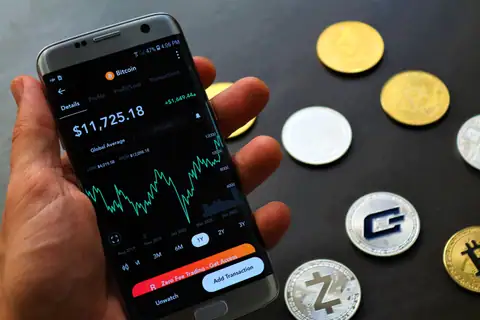
South Africa already had the plumbing before crypto arrived. Scan to Pay, Zapper, Ozow and Peach Payments put QR codes on tills, card machines, restaurant bills and online checkouts, and MoneyBadger plugs crypto wallets into those systems. The result feels like any other app payment.
-
Ask to pay by QR code
At the till, tell the cashier you’re paying by QR before they ring up the total. The till, card machine or bill shows a QR code with the rand amount.
-
Scan it from your crypto app
Open Luno, VALR, Binance, Bybit or AltCoinTrader, or your Lightning wallet, and scan the code. The app shows the rand amount and how much crypto that is at its current rate.
-
Approve, and the shop gets rand
Confirm the payment. The crypto leaves your balance, MoneyBadger or the exchange converts it, and the merchant is paid in rand. The cashier sees an ordinary QR payment.
Who pays for the conversion? Luno Pay and VALR Pay are free to you. We could not find a published consumer fee for MoneyBadger itself, so check the rate your wallet quotes against the live price before you approve a large payment.
MoneyBadger and Pick n Pay
MoneyBadger is the company behind most in-store crypto payments in the country. It’s based at Technopark in Stellenbosch and became a licensed CASP in September 2026, with FSP number 53482 on the FSCA register. Pick n Pay has taken payments through it at the till since February 2023, now in more than 1,500 stores, and MoneyBadger says it reaches nearly 700,000 merchant locations and more than 50,000 active merchants through Scan to Pay, Zapper, Ozow and Peach Payments.
So yes, you can pay with bitcoin at Pick n Pay. You can also pay with USDT, Ether or whatever your exchange lets you spend. VALR, which plugs into the same QR systems with VALR Pay, gives Pick n Pay, Makro, Clicks, Dis-Chem, Engen, Shell, FlySafair, Steers and Wimpy as examples of retailers where its QR payments work. Acceptance still depends on the branch and on which QR system its tills use, so ask first rather than after the trolley is packed.
176%
rise in rand value spent through MoneyBadger
H1 2026 vs H1 2025, MoneyBadger 2026 Report
50%
of MoneyBadger payments under US$13
Q2 2026, Chainalysis
48%
of payment value was online shopping
Q2 2026, Chainalysis
Those numbers from MoneyBadger’s own 2026 report and from Chainalysis tell you how people really use it: lots of small, everyday payments, half of them online. The number of payments rose 95% over the same period.
Luno Pay, VALR Pay, Binance Pay, Bybit Pay
Each of the big exchanges now has its own way to spend. They differ in cost, in where they work and in the licence behind them.
| App | Cost to you | Where it works | Licence behind it |
|---|---|---|---|
| Luno Pay | Free; R1 to R100,000 a payment | QR merchants; Luno says nearly a million | Luno, FSCA FSP 53314 |
| VALR Pay | Free | Wherever Zapper, Scan to Pay, Ozow or Peach is accepted | VALR, FSCA FSP 53308 |
| Binance Pay | Not published for SA | MoneyBadger merchants | No FSCA licence (application processing) |
| Bybit Pay | Not published for SA | MoneyBadger merchants, since April 2026 | Bybit SA, FSCA FSP 55680 |
From each provider's own pages, checked 17 Nov 2026.
Luno Pay launched in November 2024, and by October 2025 Luno counted more than 50,000 payments worth over R30 million. A useful detail: you can pay from a rand balance or a crypto balance. Our Luno review covers the rest of the app. VALR Pay is free, like VALR-to-VALR transfers, and rides on the same QR systems as MoneyBadger; the VALR review has the full fee list.
Binance Pay works in South Africa through MoneyBadger, so wherever MoneyBadger works you can pay from a Binance balance. Remember that Binance’s South African company has had its licence application “processing” since 22 November 2023. Bybit Pay went live through MoneyBadger in April 2026, a few weeks after Bybit SA received its FSCA licence on 10 March 2026.
Need crypto to spend?
Our top-rated platform lists about 300 coins, funded with crypto bought in rand locally. To pay in shops, keep what you plan to spend in a MoneyBadger-compatible app or a Lightning wallet.
Choose a wallet firstOur #1 pick · US FinCEN MSB · NMLS 1804170 · UK FCA reg. FRN 1007192
When a QR payment doesn’t go through
Crypto QR payments usually take seconds. When one stalls at the till, the instinct to scan again is the wrong one.
Your app says paid, the till says nothing. Don’t scan a second time. Ask the cashier to check their payment screen, and look in your app’s history for a completed payment and its reference. If it did complete and the till still shows nothing, give the store the reference and contact your wallet’s support with it, so you don’t end up paying twice for one trolley.
The amount looks wrong. Before you approve, your app shows how much crypto it will take for the rand total. Luno Pay and VALR Pay charge no payment fee, so that amount should sit close to the market price on your exchange; if it doesn’t, cancel and ask. With a Lightning wallet, check the sats amount against the rand total.
You may need to return something. We couldn’t find a published refund process for MoneyBadger payments, so ask the store how it refunds a QR payment before you buy something you might bring back, and keep the till slip with the payment reference.
Who paying with crypto doesn’t suit
It works best if you already hold crypto on a supported exchange or in a Lightning wallet and don’t mind the record-keeping. Crypto bought in FNB’s banking app can’t be moved out, so it can’t pay a MoneyBadger merchant. If your coins sit on a hardware wallet, every top-up of a spending app costs a withdrawal fee and a travel-rule declaration, so move a month’s spending at once rather than before every shop; our guide to crypto wallets shows the maths. And if you’d rather not track dozens of small disposals for SARS, pay from a rand balance with Luno Pay or keep using your bank card, and let the crypto you’re saving stay put.
Lightning and Bitcoin towns
Lightning is a payment network built on top of Bitcoin. It settles small payments in seconds for a tiny fee, and amounts are often shown in sats, the hundred-millionth part of a bitcoin. MoneyBadger accepts any Bitcoin Lightning wallet, so a Lightning app on your phone works at the same Pick n Pay tills as Luno or VALR.
Two places on the southern Cape coast went further and built local bitcoin economies:
- Witsand, a small coastal village in the Western Cape, had about 45 establishments accepting bitcoin by early 2025, up from just three in the first three years; around 28 joined in 2023 alone. Edwin Jones is the name most associated with it.
- Bitcoin Ekasi started on 5 August 2021 in the JCC Camp township near Mossel Bay, growing out of the non-profit The Surfer Kids, and is associated with Hermann Vivier. It had brought 11 shop owners on board within about a year.

Those counts date from 2022 and early 2025, so treat them as a guide and check before you travel. If you’re in the Western Cape, our Cape Town crypto guide covers local events such as Adopting Bitcoin, which returns to Workshop17 Watershed on 26–27 February 2027. New to bitcoin itself? Start with how to buy Bitcoin in South Africa.
Crypto cards: what is actually available
People search for “crypto card South Africa” all the time, usually hoping for a Visa debit card that spends crypto anywhere. Here’s what we found when we checked each card’s own help pages and terms on 17 November 2026.
| Card | Status for South African residents | What we found |
|---|---|---|
| CEX.IO Card | Not available | Card payments stopped on 3 Feb 2026 after the Polish regulator withdrew the authorisation of the company running the card programme; new cards paused |
| Luno | No card | Luno Pay QR payments instead |
| VALR | No card | VALR Pay QR payments instead |
| Crypto.com Visa | Not confirmed | No South African card article in its help centre; card pages cover the US, EU/UK, Asia-Pacific, Canada and the Gulf |
| Bybit Card | Not confirmed | Only a third-party listing saying South Africa is “not yet confirmed” |
| Binance Card, OKX Card | Not confirmed | No official source found |
The honest answer to “what is the best crypto card in South Africa?” is that, as far as we could verify, there isn’t one you can get today. A crypto debit card, crypto Visa card or any other card linked to crypto would need an issuer that serves South African residents, and none of the big names confirms that. If a site promises one, look for the card issuer’s own help page naming South Africa before you send any money, and treat a request for an upfront “card activation fee” in crypto as a red flag.
Don’t confuse this with buying crypto with a card, which works in rand on South African exchanges such as Luno and VALR (Reserve Bank rules bar South African cards from funding offshore crypto accounts); that’s covered in our guide to buying crypto with a card. For spending, QR payments do the job a card would.
Tax on spending crypto
SARS treats paying for goods or services with crypto as a barter transaction. Spending crypto is therefore a disposal, exactly like selling it: the gain or loss is the rand value of the coins when you pay, minus their base cost, meaning what you paid for them plus fees.
A quick example. You bought R1,000 of bitcoin, and months later it’s worth R1,500 when you use it to pay for groceries. You’ve made a R500 gain. If you hold as an investor, that’s a capital gain, and it counts towards your annual exclusion: R50,000 of net gains a year under the Budget 2026 proposal, which SARS applies from 1 March 2026. Most people’s grocery gains will sit inside that, but they still have to be tracked. SARS’s draft crypto guide of 1 July 2026 also confirms that crypto isn’t a “personal-use asset”, so you can’t wave away small purchases on that basis.
Two details catch people out. Spending a stablecoin like USDT is a disposal too, and if the rand has weakened since you bought it, there’s a gain in rand terms. And paying from a rand balance with Luno Pay sells no crypto at all, so there’s nothing to report on that payment. Our crypto tax guide has fuller worked examples.
Worked example: a month of grocery payments
Here’s how quickly the records pile up, using illustrative numbers. Say you bought 0.002 BTC for R1,600 in March and another 0.002 BTC for R2,000 in June. In November, with bitcoin at about R1.10 million, you pay for four R1,100 shops at Pick n Pay, each using 0.001 BTC. Under FIFO, the coins you bought first are the first you spend. The first two payments use March coins with a base cost of R800 each, so each makes a R300 gain; the next two use June coins at R1,000 each, a R100 gain apiece. That’s four disposals and R800 of gains in one month, comfortably inside an investor’s annual exclusion, but every one belongs in your records. SARS doesn’t allow the weighted-average cost many apps display, so the “average price” in your app won’t give you these numbers.
Stablecoins can go the other way. If you bought 100 USDT at an illustrative R18.00 and spent it when USDT/ZAR was about R17.04, as it was on 17 November 2026, those payments made a capital loss of about R96. Losses count too: they reduce your net gain for the year. The simplest habit is to export your exchange’s transaction history at the end of every month, while the details are fresh.
For businesses: accepting crypto payments in South Africa
For a shop, restaurant or online store, the simplest way to accept crypto is not to touch it. If you already take Scan to Pay, Zapper, Ozow or Peach Payments, MoneyBadger lets customers pay from their crypto wallets while you receive rand like any other QR payment. Ozow also markets a crypto payments product for merchants with aggregated next-day settlement. Either way, your books show a rand sale, and you carry no crypto on your balance sheet.
The legal position is clear enough. In a Joint Communication on 28 May 2026, the SARB, the FSCA, the Prudential Authority and the FIC said crypto assets are not money or legal tender, but that using them in commercial transactions isn’t prohibited (as summarised by law firm Clyde & Co). So you may accept crypto, but no customer can insist that you do.
Taking crypto straight into your own wallet is a different matter. You’d be receiving a barter payment valued at market price, holding a volatile asset, keeping the keys safe and tracking base cost for SARS. Unless you have a reason to hold crypto, a rand-settling service is far less work.
As for big-ticket items such as a car, we found no South African dealer we could verify that takes crypto directly. The practical route is to sell on a local exchange and pay by EFT; our guide on how to cash out crypto covers limits and records. For everyday spending, though, crypto payments in South Africa are already as easy as scanning a QR code at Pick n Pay.
Frequently asked questions
Can I pay with crypto at Pick n Pay?
Is there a crypto debit card in South Africa?
Do I pay tax when I spend crypto?
Which wallets work with MoneyBadger?
Can I buy a car with crypto in South Africa?
Can my business accept crypto payments?
Sources we checked
- ↗SARB — Currency and Exchanges Manual for Authorised Dealers (B.16(E)(v))
- ↗MoneyBadger — Pay with crypto in South Africa
- ↗Luno — South African fees and limits (Luno Pay)
- ↗VALR — VALR Pay
- ↗CEX.IO — Important CEX.IO Card update
- ↗Cointelegraph — Bybit Pay launches in South Africa with MoneyBadger
- ↗Chainalysis — Sub-Saharan Africa crypto adoption 2026
- ↗Ozow — Crypto payments for merchants
- ↗SARS — Crypto assets & tax
- ↗SARS — Draft Guide to the Taxation of Crypto Assets (1 Jul 2026)
- ↗SARS — IT3(c) clarification: base cost for crypto assets, FIFO or specific identification (2 Jun 2026)
- ↗Business Report — Witsand, South Africa's bitcoin-friendly town (6 Mar 2025)
- ↗Bitcoin Magazine — Bitcoin Ekasi one year later
- ↗Clyde & Co — Crypto assets in South Africa: clarity through Joint Communication 1
Risk note: crypto prices can fall sharply and you can lose all the money you put in. This page is general information, not financial or tax advice. Fees, limits and licences change; check them on the provider’s site and the FSCA register before you act.