On this page
- Bitcoin in one minute
- How to buy bitcoin in South Africa: your first R500, step by step
- Where to buy BTC with rand
- What R1,000 of Bitcoin costs in fees
- How to buy bitcoin with Capitec: a worked R500 example
- Sats: buying a fraction of a bitcoin
- Storing your BTC
- Lightning: spending BTC in South African shops
- Tax on Bitcoin
- Selling BTC back to rand
- When something goes wrong
- Risks
- FAQ
Here is the short answer to how to buy bitcoin in South Africa: open an account on an FSCA-licensed exchange such as VALR or Luno, verify your ID, send rand by EFT, and place an order on the BTC/ZAR order book. You don’t need a whole coin — VALR takes orders from R10 — and on the order book the trading fee on R1,000 comes to a few rand. The expensive mistakes happen elsewhere: one-tap “buy” screens that charge 1.6–2%, card fees of 3.9%, withdrawal fees that swallow small balances, and scams dressed up as investment clubs.
This guide walks you through a first R500 purchase, compares the real cost of R1,000 on each route, explains sats, storage and paying at the till over Lightning, and sets out what SARS expects. For the live rand price and quick conversions, use our Bitcoin to rand converter.
Bitcoin in one minute
Bitcoin is digital money that no bank or government issues. Someone using the name Satoshi Nakamoto published its design on 31 October 2008, and the network went live on 3 January 2009. Since then it has run without a central operator: thousands of computers keep identical copies of a public ledger (the blockchain), and miners compete to add a new block of transactions roughly every ten minutes.
Three rules make it different from the rand in your bank account. Supply is capped at 21 million coins. New coins only appear as a reward for miners, and that reward is cut in half about every four years — the last halving, in April 2024, took it to 3.125 BTC per block. And whoever holds the private key to a bitcoin address controls the coins: there is no call centre that can reverse a transfer.
So how does bitcoin work in South Africa specifically? The coin is the same everywhere, but you buy it in rand on local order books, where the price usually sits a little above the global dollar price converted at the official exchange rate. On 17 November 2026 that gap was about 0.5%. Since 19 October 2022 crypto assets count as financial products under the FAIS Act, so businesses that sell bitcoin to South Africans need an FSCA licence. Bitcoin is not legal tender, though: no shop has to accept it.
How to buy bitcoin in South Africa: your first R500, step by step
Set aside about 15 minutes and have your ID and a recent bank statement or utility bill to hand. The steps below assume a local exchange paid by EFT; card purchases in rand are covered further down.
-
Pick a platform and check its licence
VALR (FSP 53308) and Luno (FSP 53314) run the busiest BTC/ZAR markets. Type the FSP number into the FSCA’s online FSP search and check that the status says “Authorised” and that crypto assets are covered. Never trust a screenshot of a licence.
-
Sign up and verify your identity
Expect to upload a South African ID or passport, take a selfie and, for higher limits, add proof of address. This is FICA verification, and every legitimate platform asks for it. On Luno, the first level allows R15,000 in total and Level 2 allows R50,000 a month.
-
Deposit R500
An EFT costs nothing on VALR or Luno but can take up to two business days. Use the exact reference the exchange shows you, or the money sits in limbo. Capitec blocks ordinary transfers to exchanges in its app, so Capitec clients pay with Capitec Pay instead.
-
Buy on the order book
Open the BTC/ZAR market and enter R500. A limit order placed at the best current offer fills straight away; one placed a little lower waits in the order book and, if it fills, costs the lower maker fee. The simple “Buy” button is easier but costs 1.6% on VALR and 2% on Luno.
-
Lock down the account
Turn on app-based two-factor authentication (not SMS), add your own bank account for withdrawals, and do a small test withdrawal so you know the way out works before you put in more.
-
Save the record
Download the trade confirmation or monthly statement. SARS will want the date, the rand cost and the amount of BTC when you eventually sell, swap or spend it.
At VALR’s price on the morning of 17 November 2026, R500 bought about 45,600 sats (0.000456 BTC), and the 0.35% taker fee came to R1.75. That is the whole bill if you paid by EFT.
Want a wider coin list next to your bitcoin?
Once you hold BTC or USDT bought in rand, our top-rated exchange gives you about 300 coins plus savings and staking. Send a small test amount first.
Compare exchanges firstOur #1 pick · US FinCEN MSB · NMLS 1804170 · UK FCA reg. FRN 1007192
Where to buy BTC with rand
Where can you buy bitcoin in South Africa? Nearly every platform sells it; the differences lie in how rand gets in, what the trade costs and whether you can move the coins out afterwards. Fees below are each platform’s published entry-level rates, checked on 17 November 2026.
| Platform | Licence | How rand gets in | Fee to buy BTC | Worth knowing |
|---|---|---|---|---|
| VALR | FSP 53308 | Free EFT; card 3.9% | 0.18% maker / 0.35% taker | Deepest rand market overall; orders from R10 |
| Luno | FSP 53314 | Free EFT; Capitec Pay, Absa Pay, instant EFT | 0.40% maker / 0.60% taker | Busiest BTC/ZAR book: about 16.95 BTC in 24h |
| FNB app | Run by VALR | Your FNB account | Not published | From R10; coins can’t be sent out |
| EasyEquities crypto | FSP 22588 | Free EFT | 0.25% + 0.075% + VAT | Handy if you already invest there |
| AltCoinTrader | FSP 53614 | EFT, Capitec Pay, Absa Pay (0.5%, max R95) | Not verified | Capitec Pay without a card |
Entry-level fees as published on 17 Nov 2026. Card purchases on Luno and VALR cost 3.9%, billed in rand.
For most people the best way to buy bitcoin in South Africa is one of the first two. VALR’s whole rand market is far bigger and its fees are lower; Luno’s BTC/ZAR book is the busier of the two for bitcoin specifically and its app is gentler on a first-timer, but its 0.60% taker fee is the highest of the big local apps. Discovery Bank clients can buy through Luno inside the bank’s app.
If you want a wider coin list than the local exchanges carry, our top-rated platform, CEX.IO, lists about 300 coins and is registered in the US (FinCEN, NMLS 1804170) and the UK (FCA, FRN 1007192). It has no FSCA licence and no rand wallet, and a South African card is not the way in: the Reserve Bank’s Currency and Exchanges Manual says South African cards may not fund international crypto trading accounts. South Africans buy BTC or USDT in rand locally and send it across; to cash out, they send the coins back to a local exchange and sell. Binance has no BTC/ZAR pair at all: its only active rand market is USDT/ZAR, and its local licence application has been “processing” since 22 November 2023. Our overview of the best crypto exchanges in South Africa puts all ten side by side.
Planning to trade bitcoin often rather than hold it? Then fees and book depth matter more than the app’s look, and SARS is more likely to treat profits as income — see our crypto trading guide.
What R1,000 of Bitcoin costs in fees
Here is what R1,000 of bitcoin cost on each route on 17 November 2026, using published fees. The gap between the cheapest and the most expensive is roughly R37 — on every R1,000, every time.
| Route | Getting rand in | Buying cost | Total on R1,000 |
|---|---|---|---|
| VALR order book, EFT | R0 | R1.80–R3.50 | about R2–R4 |
| Luno exchange, EFT | R0 | R4–R6 | about R4–R6 |
| Luno exchange, Capitec Pay | R9 (amounts over R1,000) | R4–R6 | about R13–R15 |
| VALR Simple Buy | R0 | R16 (1.6%) | R16 |
| Luno instant buy | R0 | R20 (2%) | R20 |
| Card on Luno or VALR | R39 (3.9%) | R0–R3.50 | about R39–R43 |
Published fees on 17 Nov 2026. Card purchases on Luno and VALR are billed in rand.
Two costs don’t show up in that table. The first is the spread, the gap between the best buy and sell prices. On VALR’s BTC/ZAR book it was about R1 on a price of R1.09 million in our 17 November snapshot — nothing. On thin markets it can be large: ChainEX’s whole BTC/ZAR market traded only R5,620 in 24 hours that day, so check the gap before you place a market order anywhere small.
The second is moving the coins out. VALR’s public data estimated the cost of sending bitcoin at 0.0000069 BTC (under R8) on 17 November 2026. ChainEX charges 0.00006 BTC (about R66) and Altify 0.0003 BTC (about R330). On a R1,000 purchase, that last fee would swallow a third of your coins — so if you plan to withdraw to your own wallet, check the send fee before you choose where to buy.
How to buy bitcoin with Capitec: a worked R500 example
Picture a Capitec client in Soweto — call her Lerato; she’s an illustration, not a real customer — who wants her first R500 of bitcoin. In October 2024 Capitec began blocking EFT and real-time payments to crypto exchanges in its app, with the message “Payments to this beneficiary are not allowed”. We couldn’t confirm whether that block still covers every exchange today, so if Lerato sees that message, her way in is Capitec Pay, which Luno and AltCoinTrader both offer.
On Luno, Capitec Pay costs 1.25% on amounts under R1,000: R6.25 on her R500. Buying on Luno’s exchange as a taker adds 0.60%, about R3. All in, she pays roughly R9, or 1.8%, and ends up with just under 45,000 sats. If she taps the instant-buy button instead, the 2% fee replaces that R3 and her total rises to about R16. Paying by card would cost 3.9%, or R19.50 — more than double the order-book route for exactly the same bitcoin.
The fee structure also rewards fewer, larger deposits. Above R1,000, Luno’s Capitec Pay charge is a flat R9, so one R1,500 top-up costs R9 (0.6%) while three R500 top-ups cost R18.75. If Lerato plans to buy every month, one deposit just over R1,000 that she then spends in smaller orders is cheaper than paying in R500 at a time. AltCoinTrader’s Capitec Pay fee is lower still at 0.5% (R2.50 on R500), but we couldn’t verify its trading fees, so compare the final amount of bitcoin on both screens before she chooses. Our guide to rand deposits compares every way of getting money onto an exchange.
Sats: buying a fraction of a bitcoin
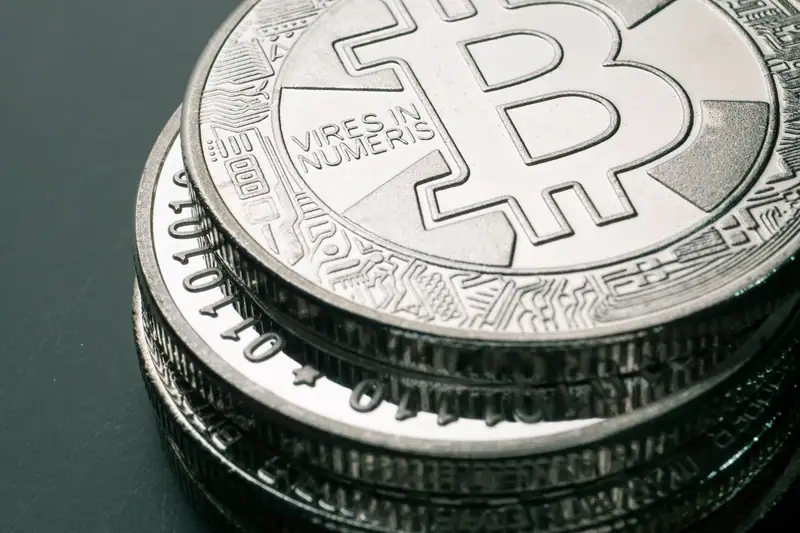
Can you buy a fraction of a bitcoin? Yes — that’s what almost everyone does. Bitcoin divides into 100 million sats, so at about R1.09 million per coin one sat was worth roughly R0.011 on 17 November 2026. R100 bought about 9,100 sats and R1,000 about 91,200. The price on your screen is for one whole coin; you simply type in a rand amount.
Minimums are low: R10 on VALR’s BTC/ZAR market and in FNB’s app, R150 on Altify. Tiny purchases are fine for learning, but fixed costs such as a R8.50 rand withdrawal or a send fee weigh far more on R50 than on R5,000.
Many people buy a fixed rand amount every month instead of trying to time the market (dollar-cost averaging). Automating it costs extra: VALR’s Auto-Buy charges 1.6% and Altify’s recurring buys 0.50%, against 0.18–0.35% for a limit order you place yourself on VALR. A monthly reminder on your phone and two minutes on the order book is the cheapest version.
Storing your BTC
You have two choices. Leaving bitcoin on a licensed exchange is simplest: the exchange holds the keys, and the big ones publish checks of their holdings — Luno a monthly proof-of-reserves attestation by Moore, VALR an August 2025 audit by Hacken that reported more than 100% backing. A licence is about conduct, though. It is not insurance, and an exchange account can be hacked if your email or phone is.
The other choice is to hold the keys yourself, in a phone wallet or a hardware wallet. Ledger lists two South African resellers, Crypto Vault and Digiwallets. Buy new and from an authorised seller: a genuine device never arrives with a recovery phrase already filled in. The 12 or 24 words of your seed phrase are the bitcoin — write them on paper, store them away from the device, and never type them into a website or share them with “support”.
A sensible split for many people: a small spending amount on the exchange, the long-term stack in a wallet only you control. Our guide to crypto wallets in South Africa compares the options and walks through setting one up.
Lightning: spending BTC in South African shops
Lightning is a payment network on top of bitcoin that settles small payments in seconds for a fraction of a cent. In South Africa it meets the till through MoneyBadger, a Stellenbosch company with its own FSCA licence (FSP 53482). Pick n Pay has accepted it at the till since February 2023, now at more than 1,500 stores, and MoneyBadger says it reaches nearly 700,000 merchant locations through Scan to Pay, Zapper, Ozow and Peach Payments.
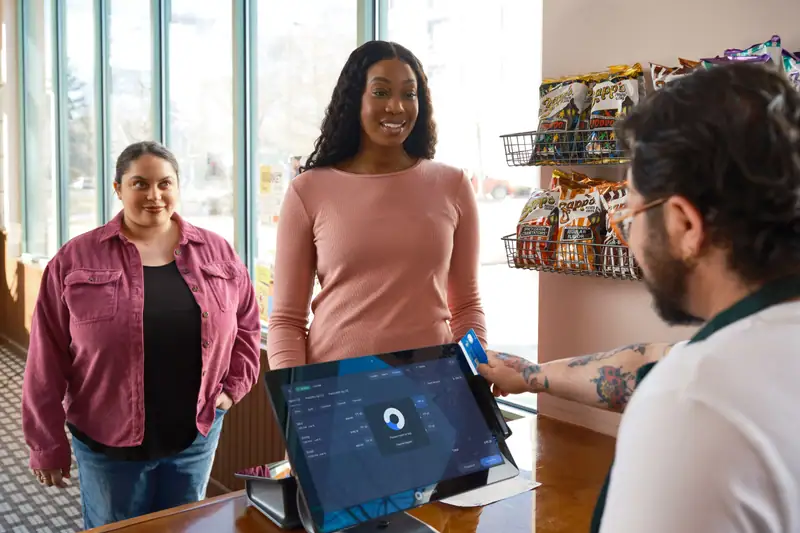
You can pay from Luno, VALR, Binance, Bybit, AltCoinTrader or any Lightning wallet, and the shop receives rand, so it carries no crypto risk. There are also bitcoin circular economies: Witsand on the Western Cape coast had about 45 establishments accepting bitcoin in early 2025, and Bitcoin Ekasi has run in JCC Camp near Mossel Bay since 5 August 2021. One catch: SARS treats paying with bitcoin as a disposal, so a coffee bought with sats is technically a taxable event. Our page on paying with crypto lists the wallets and merchants.
Tax on Bitcoin
SARS has no special bitcoin tax; it applies the normal rules. If you buy to hold, a sale is a capital gain: 40% of your net gain for the year, above the annual exclusion, is added to your taxable income, so the most you pay is 18% of the gain. The exclusion is R50,000 from the 2026/27 tax year under the Budget 2026 proposal, which SARS applies from 1 March 2026. If you trade often or arbitrage, profits are income, taxed at your marginal rate of up to 45%.
“Normal income tax rules apply to crypto assets.” Selling, swapping one coin for another and paying for goods with crypto are all disposals. For coins held as an investment, base cost uses specific identification or first-in-first-out; the weighted-average method is not allowed for crypto.
A simple example: you buy R20,000 of bitcoin and later sell it for R32,000. The R12,000 gain sits inside the proposed R50,000 annual exclusion, so if it’s your only capital gain that tax year, nothing is taxable — but you still declare it. From 1 March 2026 exchanges collect your tax details under the CARF reporting framework, with first reports to SARS due by 31 May 2027, and SARS’s crypto unit already sends letters giving 21 days to respond. Our crypto tax guide has worked examples in rand.
Selling BTC back to rand
Selling is buying in reverse: place a sell order on the BTC/ZAR market, then withdraw the rand to a bank account in your own name. VALR gives individuals 30 free rand withdrawals a month (then R8.50 each, or R30 for a fast one); Luno’s normal withdrawals are free and take up to two business days, while express costs R20 to most banks.
Coins in a private wallet or on an offshore exchange go to your local exchange account first; expect travel-rule questions on the way in. Be wary of selling to strangers on P2P markets, where stolen money is the main risk. Our guide to selling crypto for rand covers limits, timing and red flags.
When something goes wrong
Most first purchases go smoothly. When one doesn’t, the cause is usually one of three things below, and none of them is fixed by a stranger on WhatsApp or Telegram offering to help. Real exchange support works through the help centre inside the app or on the official website.
Your rand deposit hasn’t arrived
A normal EFT can take up to two business days to reflect on VALR or Luno, and weekends and public holidays don’t count. If it’s later than that, check the reference first: a missing or mistyped reference is the most common reason money sits unallocated. Then check whose account it came from. VALR and OVEX don’t accept deposits from someone else’s account, so rand sent from your spouse’s account or your business account can be rejected rather than credited. Open a ticket with your bank’s proof of payment attached, and don’t send the money a second time to “speed it up”.
The exchange asks where your money comes from
Crypto exchanges have been accountable institutions under the Financial Intelligence Centre Act since 19 December 2022. Section 21A of the Act requires them to understand “the source of the funds” a client expects to use, so a request for a payslip, a bank statement or proof that you sold a car is routine, especially as your deposits grow. It isn’t an accusation. Answer through the official app, send documents whose amounts match your deposits, and keep copies. An exchange that can’t finish these checks may have to restrict your account, so ignoring the request only delays your bitcoin.
A withdrawal is held or rejected
Under the FIC’s travel-rule guidance of 30 March 2026, an exchange must reject an outgoing transfer when the required details about the recipient are missing. So when a bitcoin withdrawal stalls, the fix is usually on your side: fill in who owns the receiving wallet or account and, for a wallet you hold yourself, be ready to show that it’s yours. The guidance also expects extra checks on transfers to self-hosted wallets, so your first large withdrawal may take longer than a small test. While the exchange still shows the withdrawal as pending, the coins haven’t left; once it’s broadcast on the blockchain, nobody can reverse it. Our travel rule explainer shows what details to enter.
Risks
Bitcoin has survived for more than 17 years, but surviving and being safe for your savings are different things. Before you put in more than you can shrug off, be clear about these:
- Price. Bitcoin has fallen by more than half several times. Only buy with money you can leave alone for years.
- The rand. Your rand value moves with both the bitcoin price and the dollar exchange rate.
- Scams. Mirror Trading International took in at least 29,421 bitcoin before courts declared it an unlawful Ponzi scheme. Anyone promising fixed returns on bitcoin is lying.
- Platforms. A licence doesn’t stop hacks: Bybit lost about US$1.5 billion in ether on 21 February 2025, although no South African user losses were reported.
- Self-custody. Lose the seed phrase and the coins are gone for good. Nobody can reset it.
- Changing rules. Exchange-control drafts on moving crypto offshore are still being revised.
Our list of crypto scams in South Africa shows how to check a platform in a minute. That’s how to buy bitcoin in South Africa without overpaying: a licensed exchange, an EFT, the order book, and a record for SARS. If you’re weighing bitcoin against other coins, see the top cryptocurrencies South Africans trade.
Start small, then widen your list
Buy R500 of bitcoin in rand at home, then send a little to our top-rated exchange to try its wider coin list. Keep every receipt: SARS will want your cost price later.
Choose a wallet firstOur #1 pick · US FinCEN MSB · NMLS 1804170 · UK FCA reg. FRN 1007192
Frequently asked questions
Is Bitcoin legal in South Africa?
What is the minimum amount of Bitcoin I can buy?
Where is the cheapest place to buy Bitcoin?
How do I sell Bitcoin for rand?
How do I buy Bitcoin with Capitec?
Can I buy Bitcoin through my bank?
Sources we checked
- ↗SARB — Currency and Exchanges Manual for Authorised Dealers (B.16(E)(v))
- ↗Bitcoin: A Peer-to-Peer Electronic Cash System (whitepaper)
- ↗VALR — Fees
- ↗VALR — public pair data (order minimums), checked 17 Nov 2026
- ↗VALR — public currency and network data (estimated send costs), checked 17 Nov 2026
- ↗Luno — South African fees and limits
- ↗FSCA — Crypto assets
- ↗FIC — PCC 61: travel rule for crypto asset service providers (30 Mar 2026)
- ↗Financial Intelligence Centre Act 38 of 2001 — section 21A (Acts Online)
- ↗OVEX — third-party deposits
- ↗SARS — Crypto assets & tax
- ↗MoneyBadger — pay with crypto in South Africa
- ↗Ledger — authorised resellers
Risk note: crypto prices can fall sharply and you can lose all the money you put in. This page is general information, not financial or tax advice. Fees, limits and licences change; check them on the provider’s site and the FSCA register before you act.